 1900 2039
  p.dbcl@ntt.edu.vn


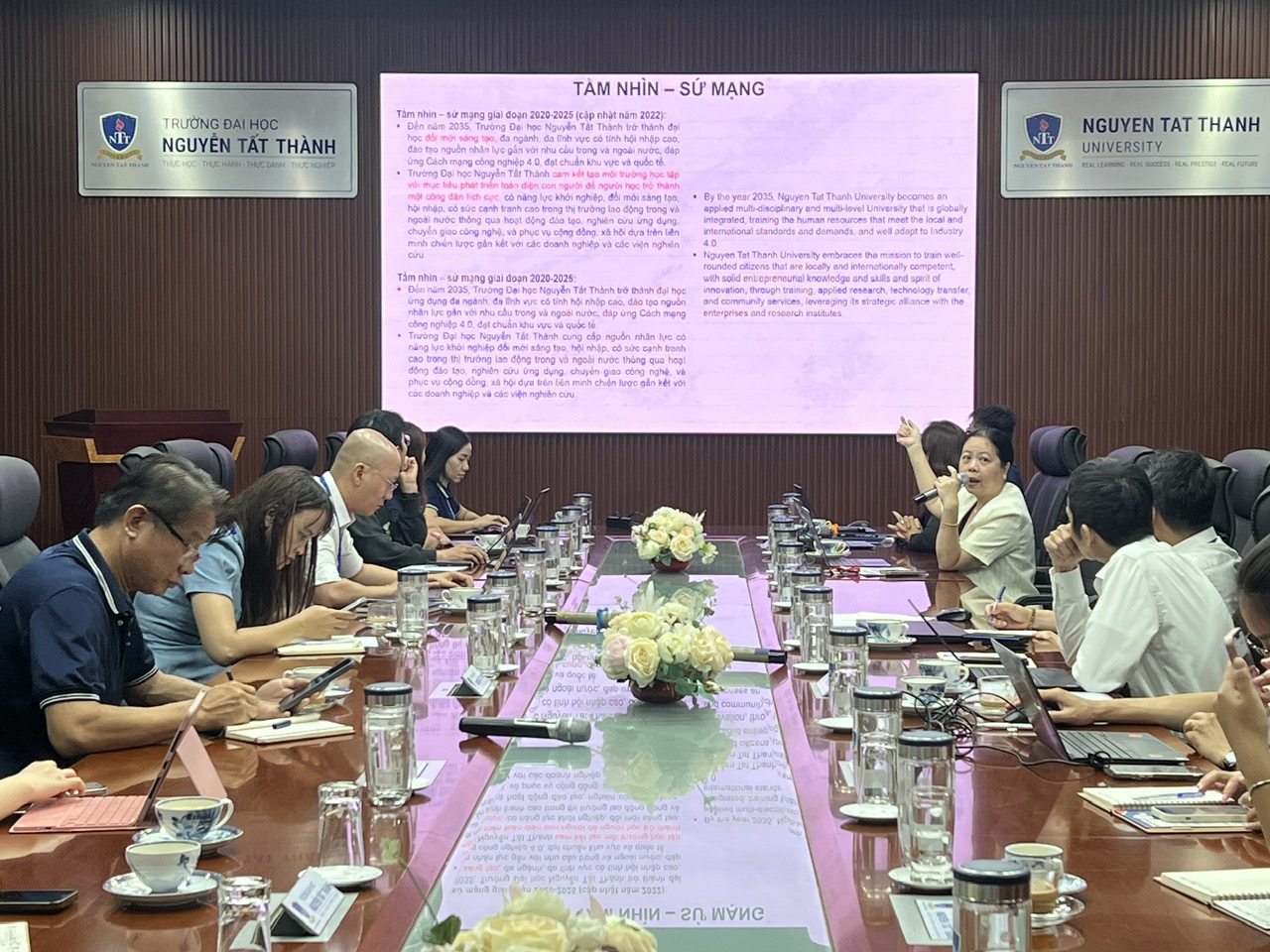
NTTU – On June 3rd and 4th, 2026, Dr. Phan Thi Viet Nam – Vice Rector and Standing Vice Chairperson of the Self-Assessment Council of Nguyen Tat Thanh University – implement a series of training sessions on developing the Self-Assessment Report at the institutional level for specialized teams. The training focused on methodological orientation, guidance on evidence collection techniques, and standardization of data systems to prepare the core foundation for the formal external evaluation phase by international experts.

The meetings were attended by the Team Leader, Deputy Team Leader, Secretary, and all members of the specialized teams. The work focused on reviewing the logic and reliability of the data system for the 2021–2025 period and the list of supporting evidence in the Self-Assessment Report; and emphasized the need to closely link the described requirements with the University’s Development Strategy, Vision, and Mission, following the path of innovation, entrepreneurship, international integration, and the holistic development of learners.
Requirements and criteria of the ASIIN standards for educational institutions
The ASIIN (German International Accreditation Commission) institutional accreditation standards are one of the most rigorous and prestigious benchmarking systems in Europe. Unlike program-level accreditation, the ASIIN institutional standards focus on comprehensively assessing the capabilities of the university governance system through core pillars which are:
- Institution strategy (vision, mission, strategic goals);
- Educational management processes and quality control at all levels of education;
- Capabilities of scientific research and technology transfer;
- Effective resource management (human resources, facilities, finance, information technology);
- Transparency of the administrative system and the level of commitment to international integration.
Completion the system of evidence and content for the report
At the in-depth meeting on training activities on the morning of June 3, 2026, Dr. Phan Thi Viet Nam – Vice Rector – noted several key tasks, including: strengthening the distinctiveness and leading role in the content describing standards and criteria; compiling data for the 2021–2025 period and comprehensively updating achievements of all levels of education up to December 31, 2025; urgently completing the system of supporting documents according to the ASIIN accreditation schedule; enhancing the integration of tables, data, and illustrative images; and organizing a review and upgrade of the English websites of the units.
Continuing the agenda, at the meeting on the afternoon of June 4, 2026, the Council members analyzed and agreed on several key requirements in the process of finalizing the report on other related areas. Specifically, the group needs to focus on clearly describing the governance system and administrative reforms in the organization of training across the entire university.
The key role of external evaluation at the educational institution level
This series of training sessions plays a particularly important role, serving as a crucial stepping stone that will determine the success or failure of the upcoming external evaluation of educational institutions. The Self-Evaluation Report is not simply a summary document, but a “dynamic picture” reflecting the organizational strength and self-improvement capacity of the institution before the international expert panel. Thorough training helps to:
- Establish methodological consistency: Ensure that the report writing approach adheres to ASIIN’s core philosophy of continuous quality management (PDCA).
- Improve the quality of evidences: Eliminate disjointed information, build a systematic original data chain, and demonstrate the practical effectiveness of the management.
- Ensure interconnectedness: Fostering accountability among all departments, divisions, and faculties throughout the University.
The success of the two training sessions once again affirms the thorough preparation and strong determination of the teaching staff of Nguyen Tat Thanh University in proactively transforming and aligning the system according to the highest international standards.
Department of Quality Assurance
