 1900 2039
  p.dbcl@ntt.edu.vn


From sharing international experience and exchanging practical practices among universities to agreeing on a reference framework and implementation plan, the ACCEES project is gradually laying the foundation for the development and sharing of Open Educational Resources (OER) among Vietnamese universities.
From July 30 to August 1, 2025, at Hanoi University, the ACCEES project organized the seminar “Developing a Reference Framework for Open Educational Resources,” with the participation of representatives from ACCEES project member institutions in Vietnam, including Nguyen Tat Thanh University (NTTU). The activity was led by Dr. Mokhtar Ben Henda, a lecturer and researcher at Bordeaux Montaigne University (France), an expert with many years of involvement in international standardization activities in the field of educational technology and a recipient of the IEC 1906 Award 2025 from the International Electrotechnical Commission (IEC).
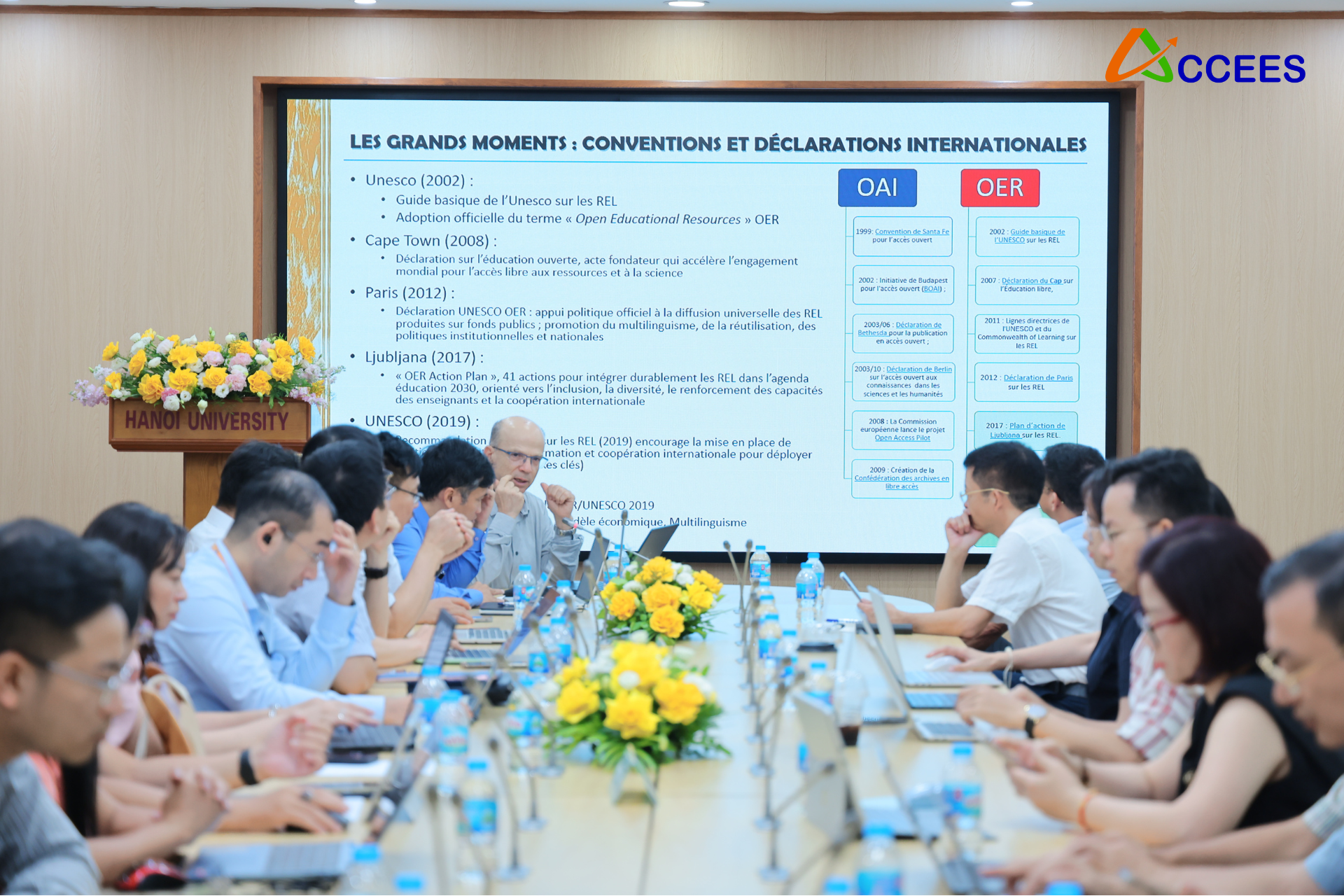
From International Experience to Practical Practices at Universities
During the three-day working session, delegates discussed global trends in OER development, the results of a survey on the current situation in Vietnam, international standards, and the practical implementation conditions at each member university. The discussions focused not only on technological platforms but also extended to practical issues such as learning resource management, metadata, copyright, open licenses, and the ability to share resources among universities.
Participating in the discussion sessions, Ms. Tran Thi Thuy Kieu, Director of the NTTU Library Center, contributed many perspectives from the practical management and utilization of academic resources at the university. From a library perspective, OER is not simply about putting learning materials in an online environment, but also about ensuring that learners can conveniently and appropriately search for, access, and use resources. For NTTU, OER is viewed not only as a source of learning materials serving learners within a single university, but also as a means of sharing knowledge with the community. When properly organized, standardized, and licensed, learning materials created during the teaching process can continue to be utilized and reused, becoming a common resource for learners, lecturers, and those who need access to knowledge.
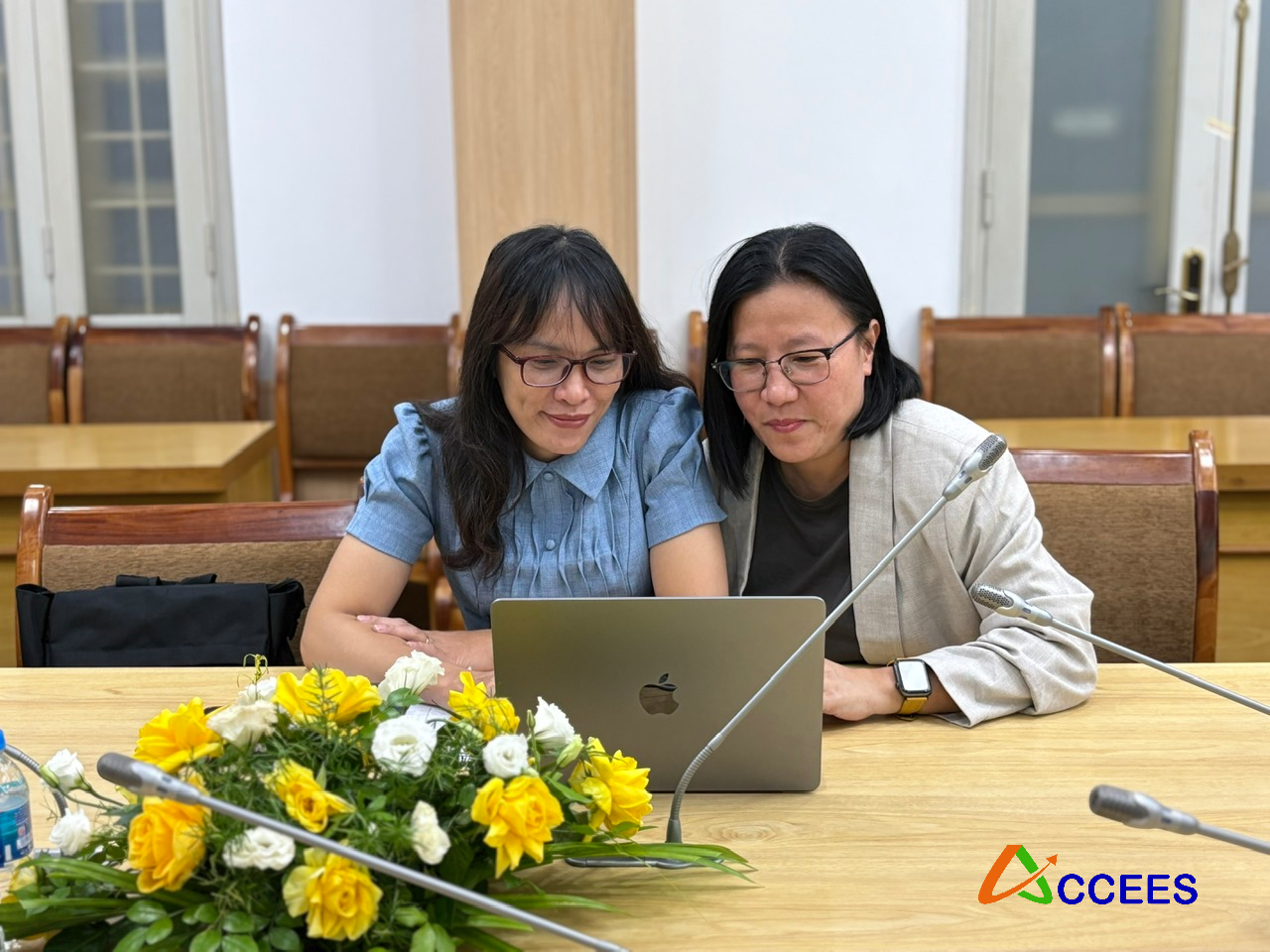
From the Reference Framework to the Implementation Plan
An important outcome of the seminar was that the member universities reached an agreement on the draft OER Metadata Framework based on the international LOM standard. This framework provides a basis for learning materials to be described and organized according to common principles, supporting the search, classification, sharing, and reuse of resources among institutions. Alongside the technical content, delegates also discussed intellectual property, open licenses, and the capacity of lecturers in the process of creating and utilizing OER. Accordingly, the implementation plan was shaped around key areas of work: reviewing legal and intellectual property issues, applying open licenses, finalizing learning resource and metadata standards, and studying technical options for an OER sharing platform.
Through the discussion sessions, the member universities agreed on the content needed to jointly develop the ACCEES OER system, while also identifying the tasks that each university needs to prepare during the implementation process. Practical input from NTTU, including issues related to the organization and utilization of resources at the library, was also incorporated into the development of the project’s common content.
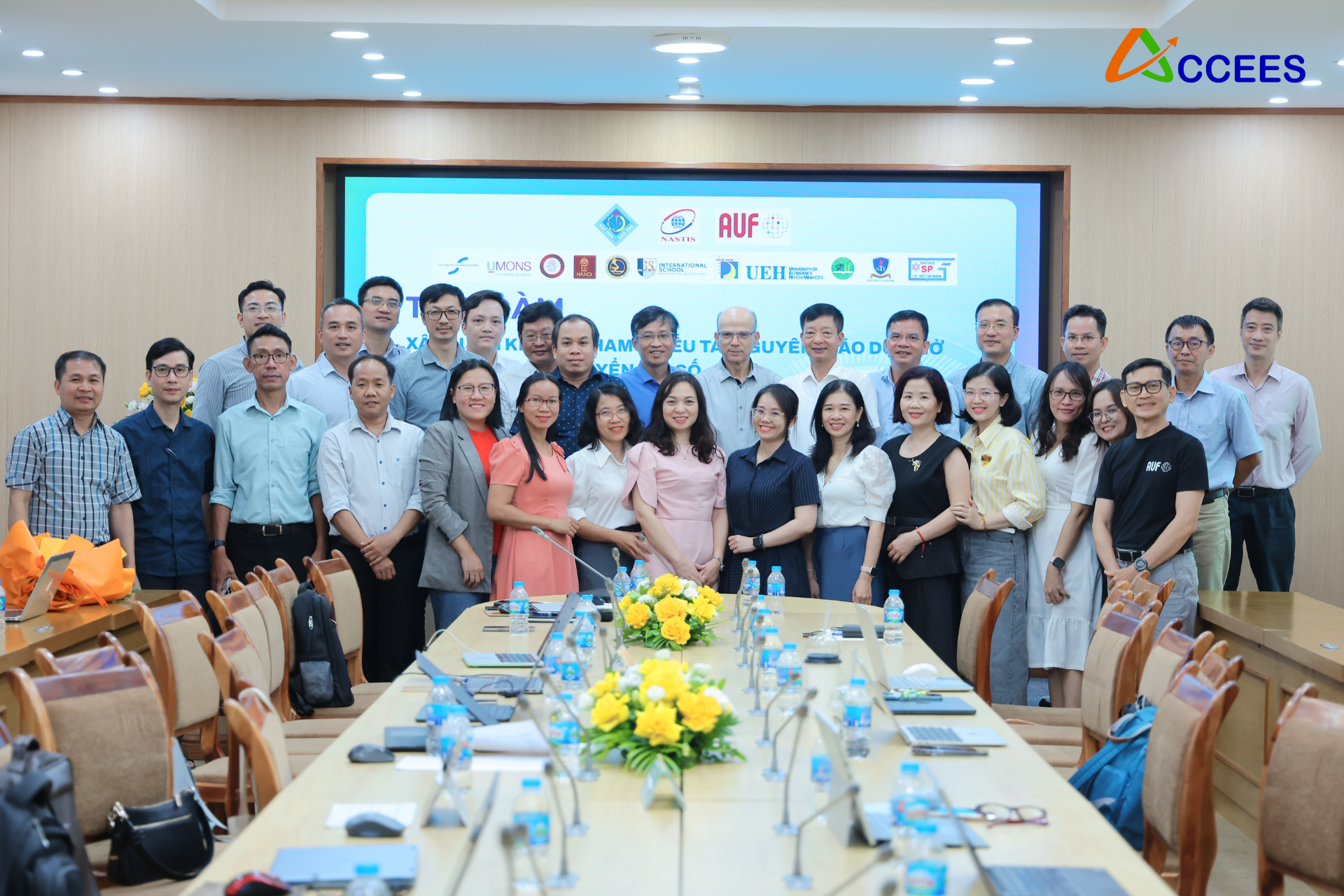
From Project Outcomes to National-Level Discussions
A notable highlight was that the outcomes and experiences from ACCEES were shared by project representatives, who also contributed comments at a seminar organized by the Ministry of Education and Training on the draft decree related to Open Educational Resources.
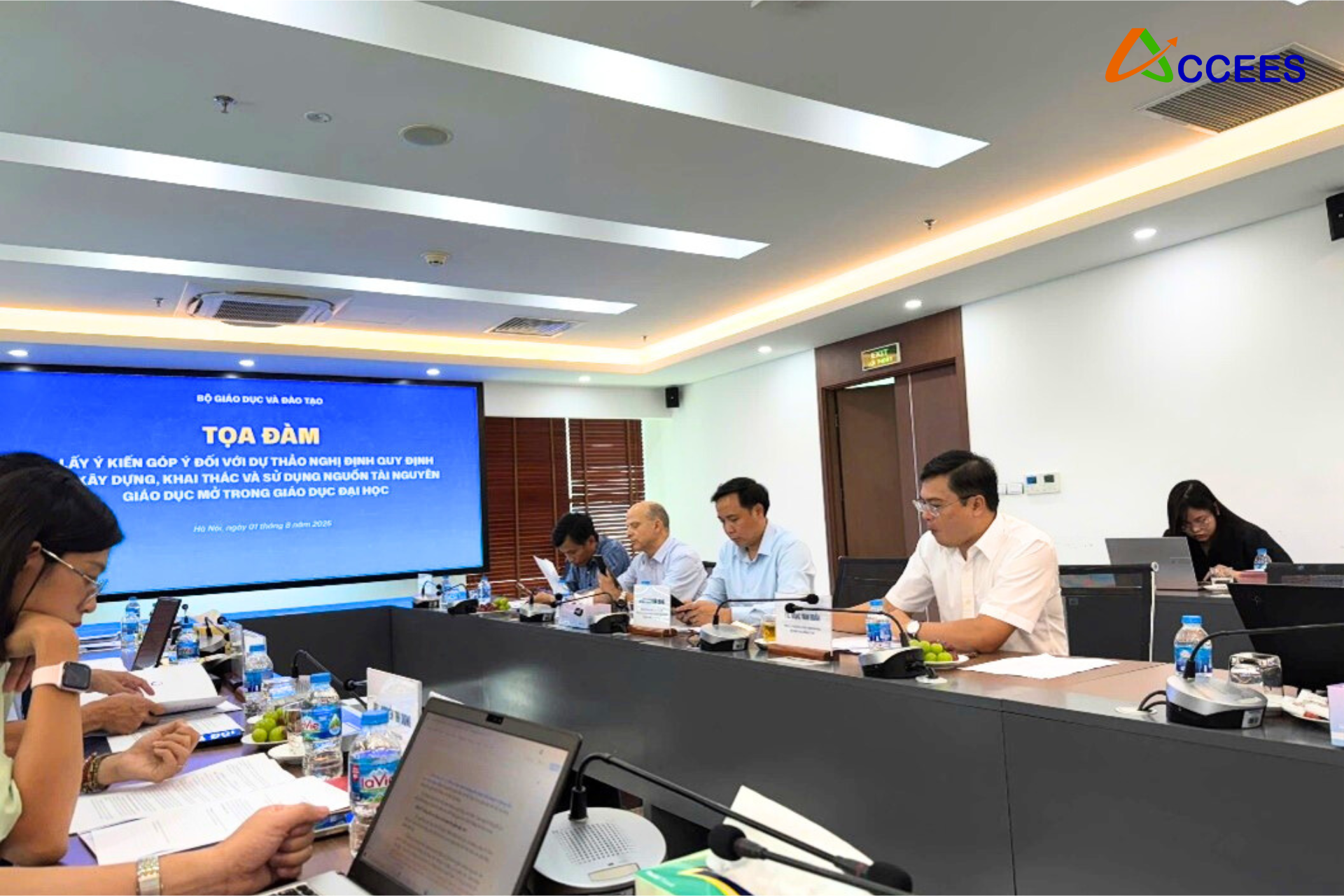
The fact that experiences developed through the cooperation and practical implementation at member universities were brought into national-level discussions demonstrates that ACCEES not only aims to build a shared system within the scope of the project, but can also contribute practical experiences and recommendations to the development of OER in Vietnam.
The seminar at Hanoi University therefore marked an important transition for the OER component: from surveying and identifying needs to agreeing on a reference framework, developing an implementation plan, and connecting with policy-level discussions.
In the next phase, ACCEES will continue to refine policy, standards, and technical solutions, with the goal of building a shared Open Educational Resources platform among member universities, contributing to the formation of an open, connected, and sustainable digital higher education ecosystem in Vietnam.
