 1900 2039
  p.dbcl@ntt.edu.vn


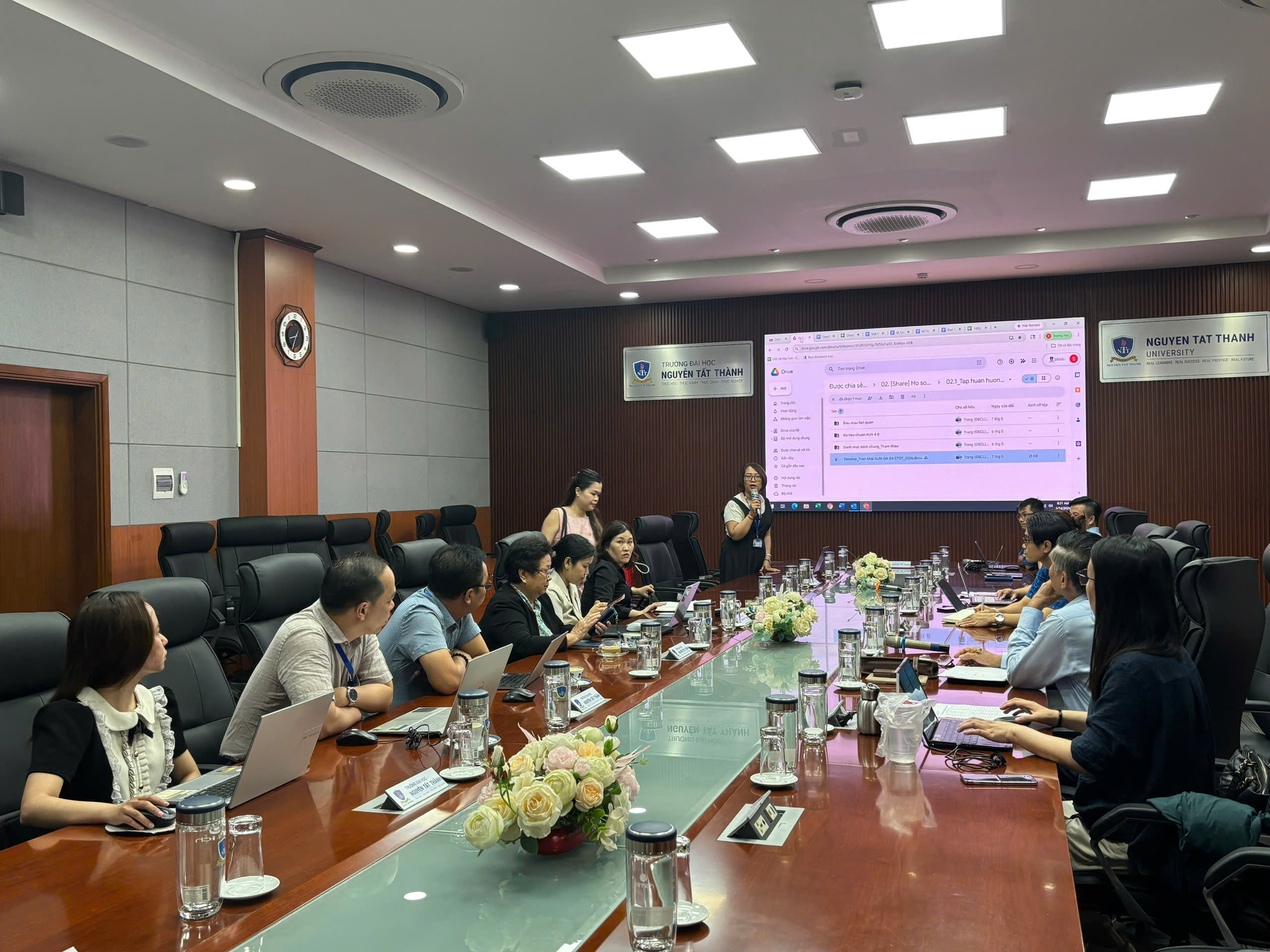
NTTU – On the morning of May 14, 2026, the Department of Quality Assurance – Nguyen Tat Thanh University held a meeting to launch the self-assessment of four academic programmes based on the AUN-QA Criteria, Version 4.0. This marks a strategic step in standardizing quality in line with regional benchmarks and advancing the University’s international integration process.
The meeting was attended by the management team of the Department of Quality Assurance, representatives of faculty leadership, and members of the self-assessment teams from the four academic programmes:
- Bachelor in Software Engineering, Faculty of Information Technology.
- Bachelor in Chinese Studies, Faculty of Foreign Languages.
- Master of Nursing, Faculty of Nursing.
- Bachelor in International Business, Faculty of Business Administration.
Strengthening Quality Standardization in Line with Regional Standards
Speaking at the meeting, Dr. Ho Thi My Linh, Head of the Department of Quality Assurance, emphasized that conducting self-assessment provides an important opportunity for academic programmes to comprehensively review and improve their operations, including programme design and enhancement, resources supporting programme implementation, and the assessment of learning outcomes. This is an essential preparatory step to help the programmes align their contents with the requirements of the AUN-QA Criteria and move toward international accreditation standards.
Key Focus Areas of the Self-Assessment Process
At the meeting, Mr. Le Huu Son, Deputy Head of the Department of Quality Assurance, provided detailed guidance on the self-assessment roadmap, focusing on key areas including:
- The process of writing the Self-Assessment Report and collecting supporting evidence;
- The review of the Programme Specification and the completion of the matrix showing the contribution of each course to the programme learning outcomes, ensuring coherence and consistency;
- The review of course syllabi to ensure their quality and clarity, with clearly defined links between course learning outcomes, programme learning outcomes, lesson learning outcomes, and the expected level of learner achievement;
- The communication of information related to the assessed academic programmes on faculty websites to strengthen community and international engagement;
- The integration of self-assessment activities with the long-term development plans of the faculties for the 2026–2030 period.
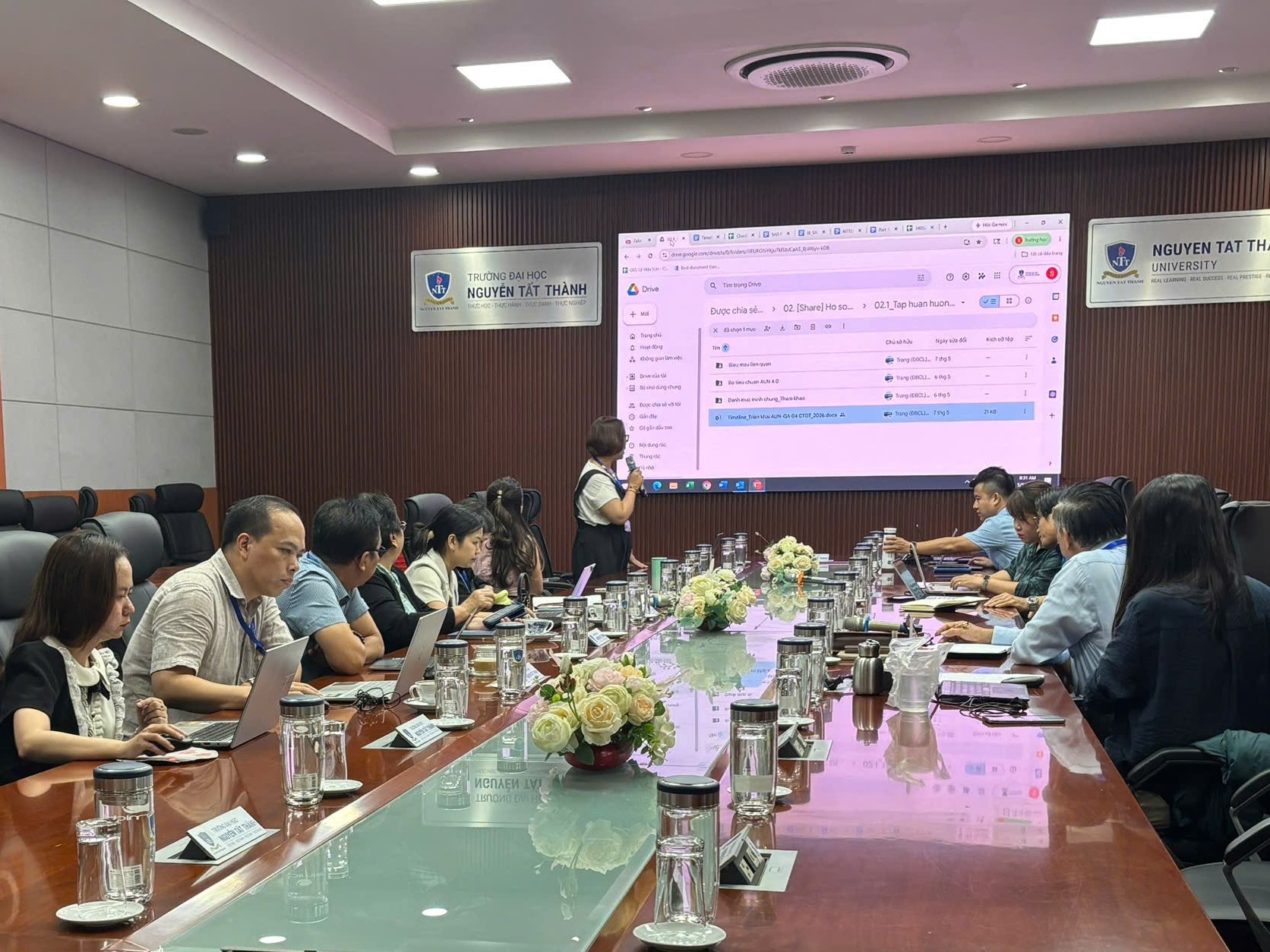
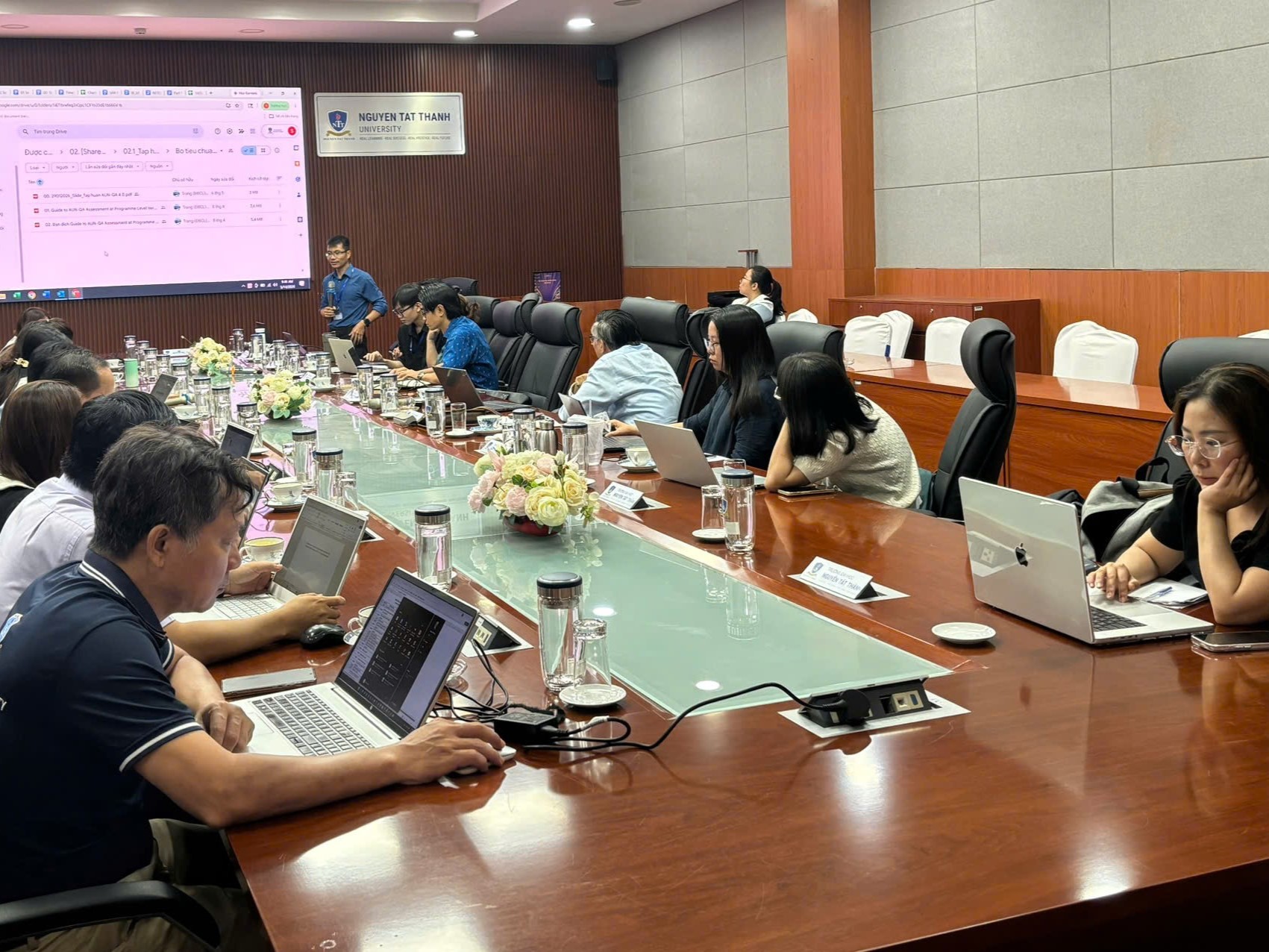
After agreeing on the implementation roadmap, the participating units are ready to begin completing their Self-Assessment Reports and further promote substantive quality improvement activities. The proactive spirit and strong determination of the four academic programmes are expected not only to create new quality milestones, but also to demonstrate Nguyen Tat Thanh University’s commitment to enhancing educational quality and strengthening its position on the international higher education map.
Department of Quality Assurance
