 1900 2039
  p.dbcl@ntt.edu.vn


NTTU – From purple passion fruit peels, an agricultural by-product often discarded, a group of faculty members from the Faculty of Applied Sciences and Technology at Nguyen Tat Thanh University has developed a bio-based formulation for post-harvest banana preservation. The research has been awarded the Le Van Thoi Award for Green Chemistry 2025, affirming NTTU’s strengths in applied research, innovation, and sustainable development orientation.
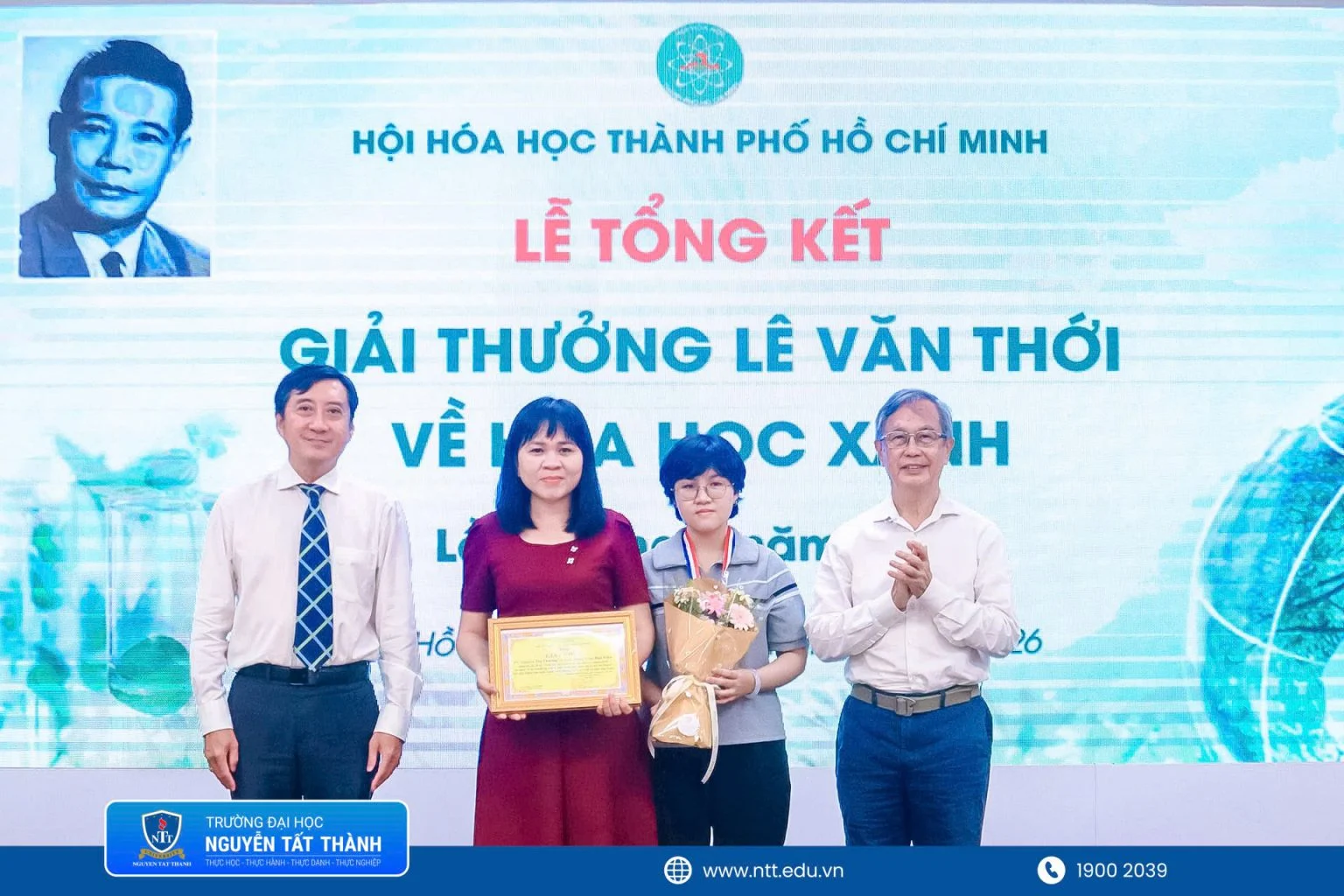
Recently in Ho Chi Minh City, the Ho Chi Minh City Chemical Society held the closing ceremony and awarding of the second Le Van Thoi Award for Green Chemistry 2025, while also launching the 2026 season. The event brought together scientists, lecturers, businesses, research institutes, and production units working in chemistry and other related fields.
At the ceremony, the research titled “Synthesis of a bio-based coating derived from pectin extracted from purple passion fruit peels and agar for post-harvest banana preservation”, conducted by Dr. Nguyen Thi Thuong and Ms. Pham Tran Bao Tran, lecturers of the Faculty of Applied Sciences and Technology at Nguyen Tat Thanh University, was awarded the First Prize.
The award is not only recognition of the group’s serious research efforts but also a highlight in the university’s scientific and technological activities. From a practical agricultural issue, the researchers developed a scientifically grounded solution with high application value, aligned with green chemistry, circular economy principles, and sustainable development trends.
In the context of Vietnamese agriculture facing challenges such as post-harvest losses, food safety concerns, preservation costs, and environmental pressures, the research presented by the NTTU lecturer demonstrates the increasingly important role of universities in addressing pressing societal issues through scientific knowledge and innovation.
From NTTU Laboratories to Major Agricultural Challenges in Vietnam
The key highlight of the study lies in how the research team identified the problem. Instead of starting from a distant theoretical direction, the researchers began with a very practical agricultural challenge: how to preserve post-harvest fruits safely, efficiently, cost-effectively, and in an environmentally friendly way.
Bananas are tropical fruits rich in nutrients, containing beneficial compounds such as vitamin C, vitamin E, β-carotene, dopamine, and gallocatechin. However, bananas have a high respiration rate, ripen quickly, spoil easily, and have a short shelf life after harvest. This makes maintaining quality from farm to consumer market a persistent challenge.
In practice, some preservation methods such as cold storage or radiation treatment can be effective. However, these techniques are often costly and not easily accessible to farmers. In addition, excessive use of chemicals in post-harvest preservation poses risks to public health, food safety, and the environment.
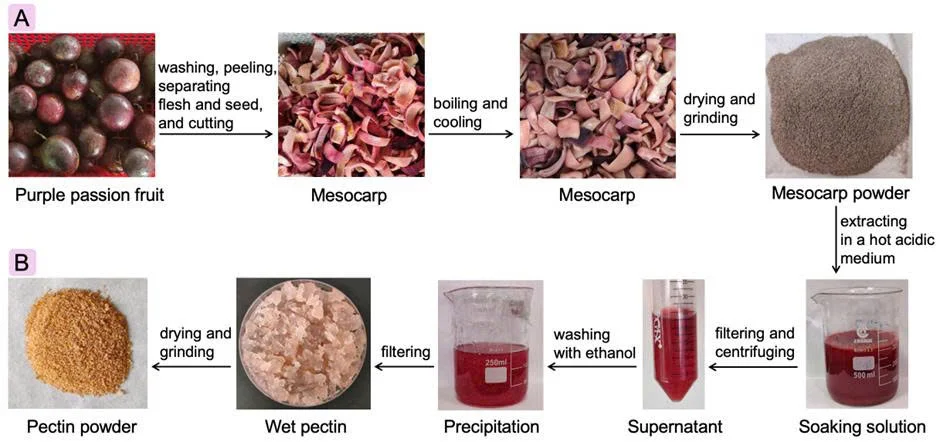
Based on this reality, the NTTU research team developed a bio-based solution: a formulation derived from pectin extracted from purple passion fruit peels combined with agar for banana preservation.
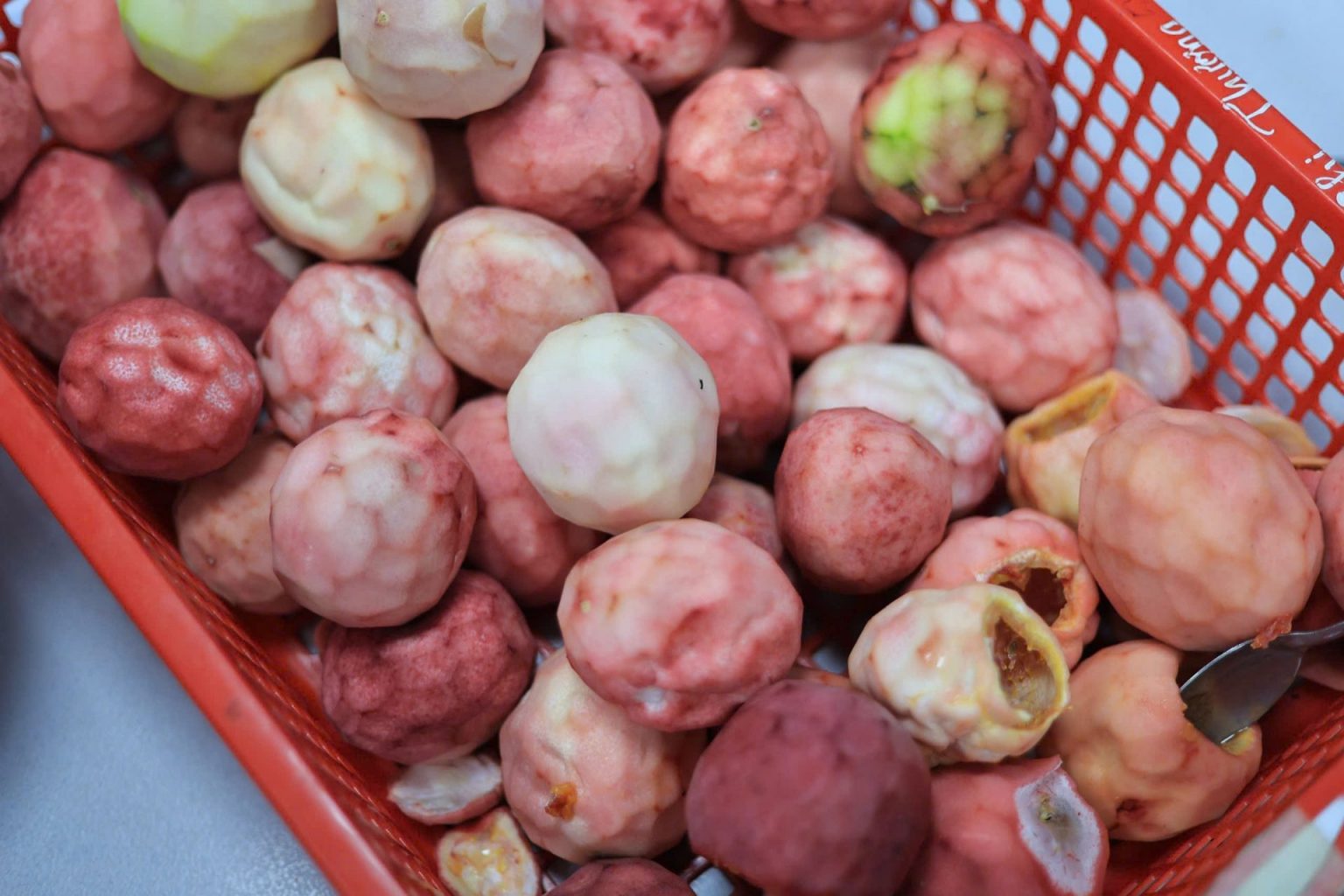
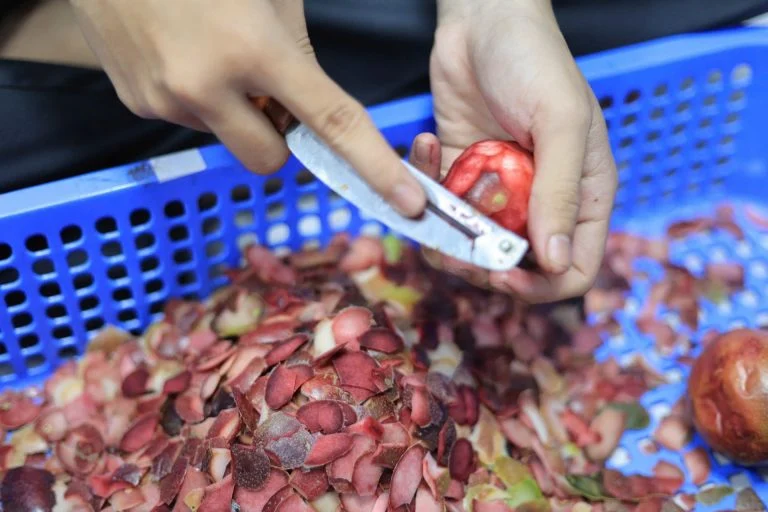
Purple passion fruit is widely cultivated in Vietnam. After processing, its peel is often discarded as agricultural waste, creating environmental pressure. However, from the researchers’ perspective, this by-product is not waste but a valuable raw material.
According to the research team, pectin extracted from the inner peel of purple passion fruit has strong membrane-forming properties. It is a natural polysaccharide with relatively low cost and abundant availability, with potential to replace petroleum-based materials in food packaging applications. In the context of conventional plastics causing environmental issues due to poor biodegradability, utilizing pectin from agricultural waste offers scientific, economic, and environmental benefits.
This approach reflects NTTU’s applied research philosophy: research is not limited to laboratories but aims to create solutions that address real-world production and life challenges while contributing to sustainable development.
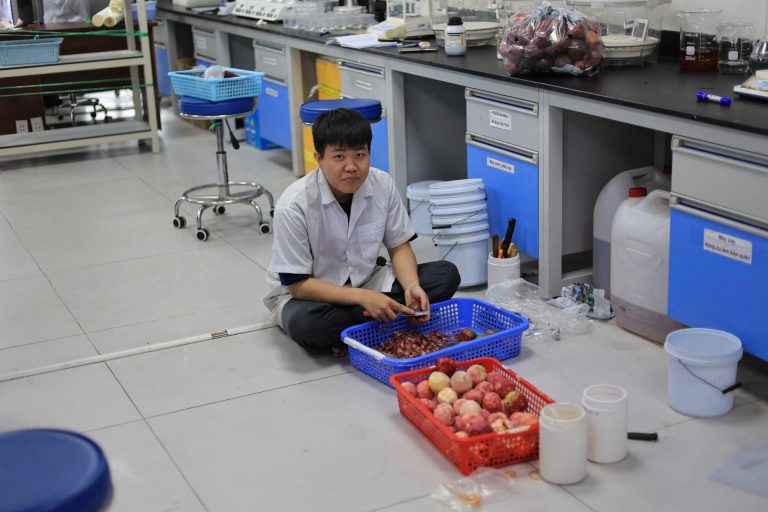
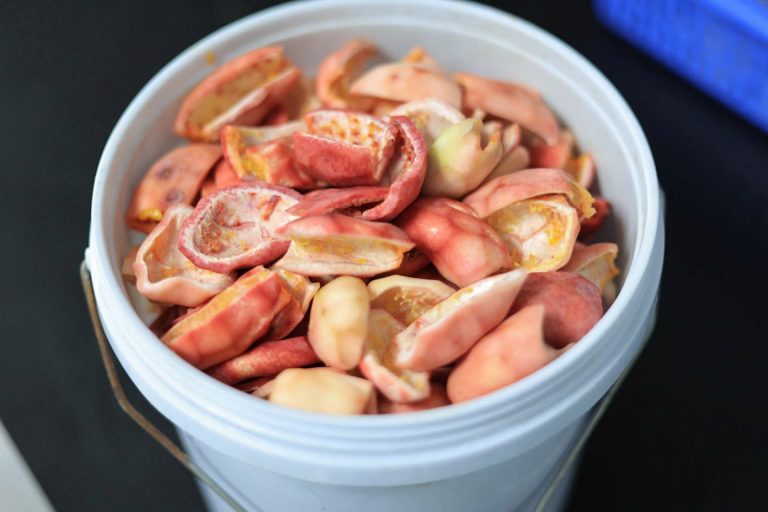
The Research Project Wins the Award for Its novelty, practical application, and orientation to green chemistry
According to the research findings, the bio-based coating derived from pectin extracted from purple passion fruit peel combined with agar can extend the post-harvest shelf life of Laba bananas to 8 days at 22–25°C, which is 4 days longer compared to uncoated fruits.
During storage, the bio-coating slows down significant quality-related changes, including browning index, respiration rate, weight loss, firmness, total soluble solids content, total acidity, and ripening rate. These factors are directly linked to the post-harvest quality of agricultural produce.
In terms of novelty, the study is highly valued for incorporating agar into a pectin-based film extracted from purple passion fruit peel. According to the research team, a pectin-to-agar ratio of 2:1.5 improves mechanical strength and hydrophilic properties of the coating. Notably, the research has been published in a prestigious international ISI Q1-indexed journal, demonstrating the academic quality and research capability of the NTTU faculty team.
Beyond preservation efficiency, the coating also strongly meets the criteria of Green Chemistry and Green Engineering. The study aligns with 10 out of 12 principles of Green Chemistry and Green Engineering, as well as the “5R” orientation.
Specifically, the project contributes to waste reduction by utilizing purple passion fruit peel as a pectin source, thereby reducing organic waste treatment burdens and creating a biodegradable bio-coating. It reduces raw material consumption through a simplified formulation consisting of pectin, agar, glycerol, and water, minimizing the use of unnecessary chemicals or additives. The process also reduces energy consumption by conducting material processing and synthesis at temperatures below 100°C, optimizing each step compared to high-temperature conventional methods.
In addition, the study reduces hazard levels by using organic acids such as citric acid for pectin extraction instead of strong inorganic acids like HCl or H₂SO₄, thereby lowering risks of corrosion, toxicity, and chemical safety hazards. Finally, the solution helps reduce costs by utilizing locally available agricultural by-products while also lowering waste treatment expenses.
The environmental and socio-economic benefits are also important strengths of the project, including reduced use of toxic solvents, no generation of hazardous waste, increased reuse of agricultural by-products, lower chemical costs, reduced waste treatment expenses, and improved occupational safety conditions.
With these outcomes, the project is not only scientifically convincing but also demonstrates strong potential to contribute to a more sustainable agricultural value chain: reducing post-harvest losses, minimizing environmental impact, valorizing agricultural by-products, enhancing crop value, and opening new directions for bio-based material development from local resources.
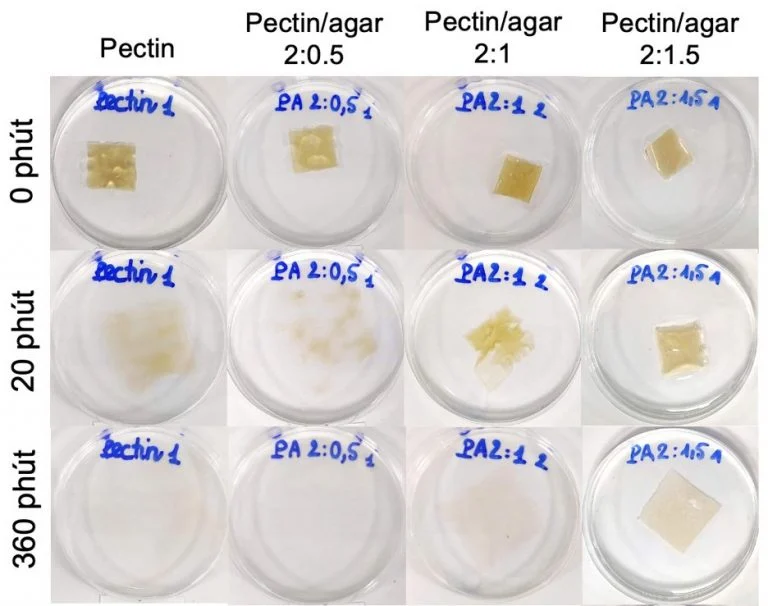
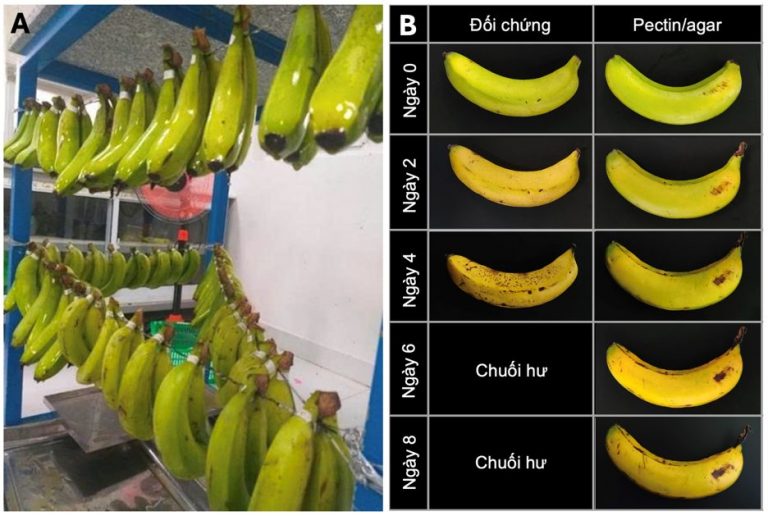
Highlighting the Faculty of Applied Sciences and Technology and Research Capacity
This award highlights the role of NTTU lecturers in scientific research and innovation. Dr. Nguyen Thi Thuong and MSc. Pham Tran Bao Tran not only conducted a highly valuable research project but also demonstrated the modern university lecturer’s role: simultaneously teaching, conducting research, and connecting academic knowledge with real-world needs of society, community and industry.
The project shows how a very specific agricultural issue, post-harvest banana preservation, can be transformed into a structured scientific study with validated results and practical applications. It also reflects the orientation of the Faculty of Applied Sciences and Technology: starting from real-life problems, applying scientific methods, and aiming for societal value.
For the Faculty of Applied Sciences and Technology, the success of this project is clear evidence of its capacity to organize applied research. The Faculty not only provides foundational knowledge in the field of science and technology but also creates an environment for lecturers and students to access real-world problems, thereby forming research directions capable of generating products, models, or solutions to serve the community.
In particular, the project also highlights the application depth of the Pharmacy program at NTTU, extending beyond research on active ingredients, medicinal herbs, or healthcare products, into formula development thinking, safety assessment, quality control, biomaterial research, and the development of beneficial preparations for life.
From this research, students majoring in Pharmaceutical Chemistry can see a clear research pathway: identifying real-world issues, selecting raw materials, designing formulations, studying material properties, evaluating preservation efficiency, testing safety, and determining application direction. This is an approach that integrates theory with practice, laboratory work with real life, and expertise with social responsibility.
Beyond producing research results, lecturers also guide students in scientific thinking. Through such projects, NTTU students can learn that scientific is not something far-fetched; many ideas originate from everyday problems such as fruit spoilage, agricultural waste, preservation needs, and sustainable farming challenges.
It is precisely from these everyday problems, if approached with a scientific method, that students can develop critical thinking, creativity, and problem-solving skills – crucial competencies for human resources in the field of science and technology today.
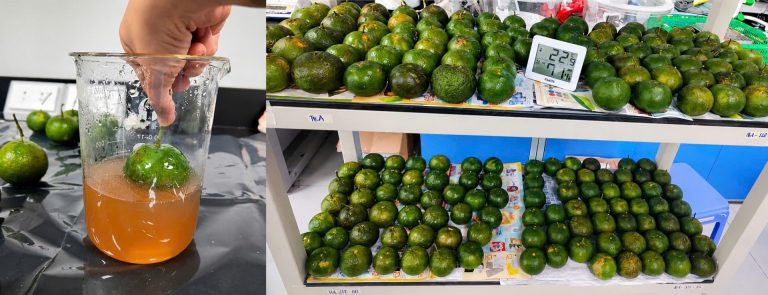
NTTU FAST: From Applied Research to Technology Transfer for Sustainable Development
The success of the research team at the Le Van Thoi Award for Green Chemistry 2025 further confirms Nguyen Tat Thanh University’s orientation toward linking research with real-world application.
At NTTU, scientific research is not only an academic activity for faculty members but also an essential part of improving the quality of education, developing human resources, and fostering an innovation-driven university environment. The university provides facilities, equipment, academic spaces, and support mechanisms to enable applied research.
According to the research team, NTTU, the Institute of Applied Technology and Sustainable Development, and the Faculty of Applied Sciences and Technology supported and facilitated the completion of the research. This encouragement played an important role in helping the team pursue innovation and practical application.
Prof. Dr. Dinh Van Phuc, Head of the Faculty of Applied Sciences and Technology (FAST), stated that the project reflects the faculty’s strategic direction of shifting from basic research toward applied research that directly addresses societal challenges.
According to Associate Professor Dr. Dinh Van Phuc, FAST prioritizes not only academic publications but also products, models, and solutions that serve real-life needs. In the spirit of partnering with businesses, the faculty promotes circular economy models by reusing agricultural by-products and biological waste to create advanced materials.
From this direction, studies such as the pectin–agar bio-coating for banana preservation not only have the significance of an award-winning project, but also represent the faculty’s applied research capacity. It demonstrates how scientific knowledge is used to solve practical problems in agriculture, environment, and sustainable development.
Beyond raw material utilization, the faculty also focuses on modern technologies, process optimization, and energy efficiency. This is considered a crucial foundation for realizing sustainable development goals, while also preparing the capacity for large-scale technology transfer initiatives in the future.
From a broader perspective, the study highlights the role of universities in addressing national development issues. With post-harvest losses remaining a major challenge in Vietnam’s agriculture, safe, cost-effective, and environmentally friendly preservation solutions are essential. This research shows how universities can be the starting point for such practical solutions.
Following the Le Van Thoi award, the research team hopes to further refine and expand the study for broader application in post-harvest preservation. The achievement also helps promote scientific research and innovation among lecturers and students at NTTU.
From purple passion fruit peels to bio-based banana preservation coatings, the research journey of Dr. Nguyen Thi Thuong and Ms. Pham Tran Bao Tran demonstrates how NTTU brings knowledge from classrooms closer to real life. The award recognizes not only an excellent green chemistry project but also the research capacity, creativity, and social responsibility of NTTU’s faculty.
In the context of higher education increasingly expected to contribute to innovation and sustainable development, such achievements reaffirm NTTU’s position as a university committed to education, research, and community-oriented knowledge application.
Written by: Cam Thach
Images: Research team
