 1900 2039
  p.dbcl@ntt.edu.vn


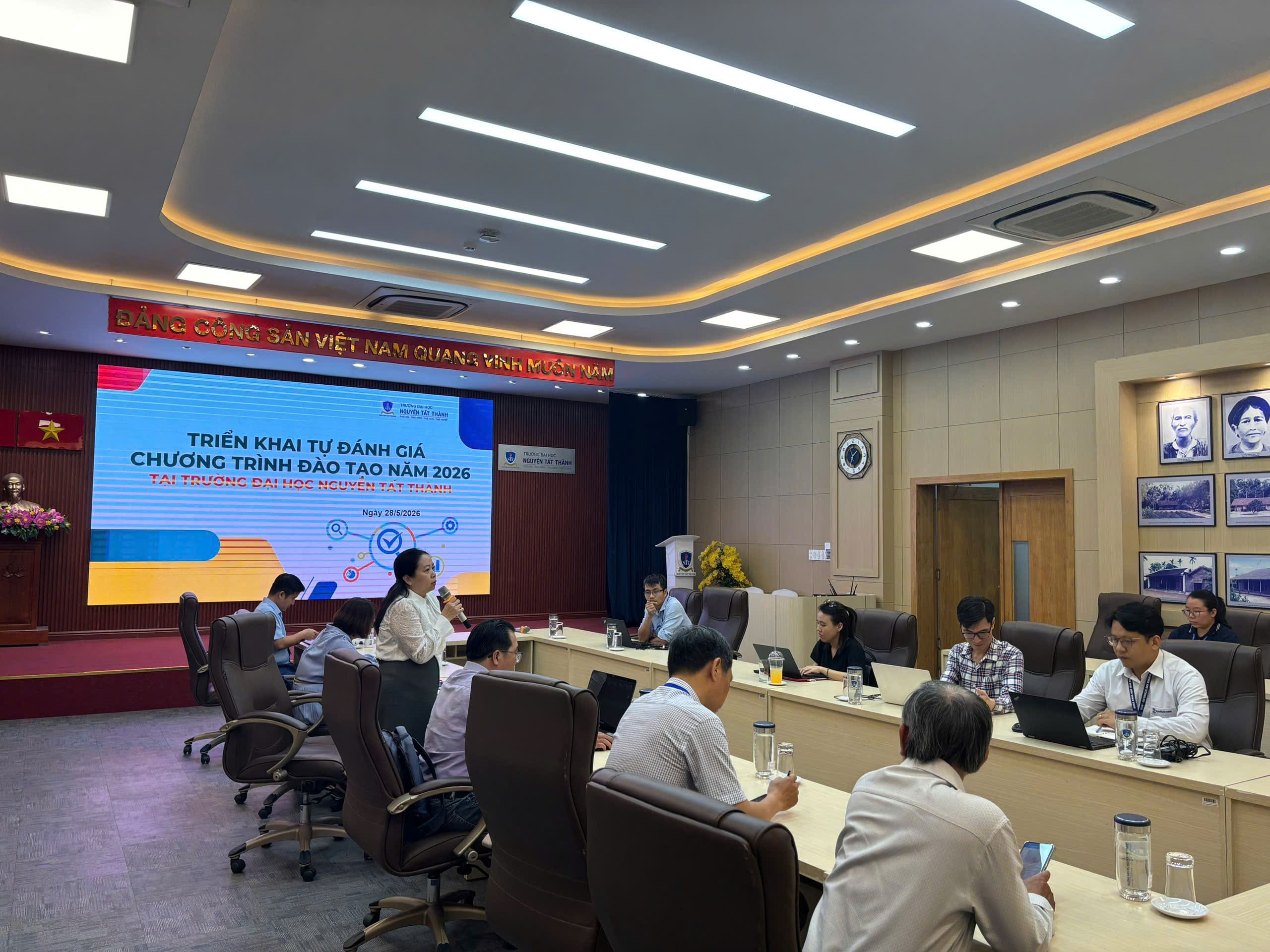
NTTU – On the afternoon of May 28, 2026, in order to meet the requirements of ensuring educational quality in the new phase, Nguyen Tat Thanh University officially launched the self-assessment procedure for 11 training programs in 2026. This event marks an important starting point in applying the new regulations in Circular 04/2025/TT-BGDĐT.

The meeting was chaired by Dr. Phan Thi Viet Nam, Vice Rector of the University. Attending the meeting were representatives from the Quality Assurance Department, the Training Management Department, the Examination Center, and the leaders of the 8 faculties managing the 11 training programs during this period. This is an important first step marking the transition from the set of standards for evaluating the quality of training programs according to Circular 04/2016/TT-BGDĐT (11 standards, 50 criteria) to Circular 04/2025/TT-BGDĐT (8 standards, 52 criteria).
Self-assessment is not only a legally mandated requirement but also an opportunity for training institutions to comprehensively review the current state of their training programs. This allows them to identify strengths to be leveraged and areas for improvement, ranging from learning outcomes, curriculum structure and content, teaching staff, facilities, student support services, and final results.
Self-assessment – Positioning the training program for proactive and continuous quality improvement.
In her remarks at the meeting, Dr. Phan Thi Viet Nam emphasized that the purpose of conducting the Self-Assessment Report is not to “evaluate shortcomings” of the training programs. On the contrary, it is a powerful tool for faculties to proactively review the entire process of operating the training program over the past period, including the first self-assessment or the second cycle reassessment.
“The goal of self-assessment is to implement continuous improvement. If any self-assessment criteria are not met, the Faculty needs to acknowledge the shortcomings, accurately identify areas for improvement, and proactively develop a specific improvement plan,”shared Dr. Phan Thi Viet Nam. Depending on the cycle, the programs will have different assessment focuses:
- For the first self-assessment of a training program, the focus should be on identifying areas for improvement in order to determine specific and feasible action plans for improvement.
- For the second self-assessment training program, the requirements are higher, as the descriptive criteria need to incorporate the results of the improvement assessment based on recommendations from the previous cycle and current achievements; for criteria that do not meet the new requirements, improvement plans must also be established.
New legal framework and accountability
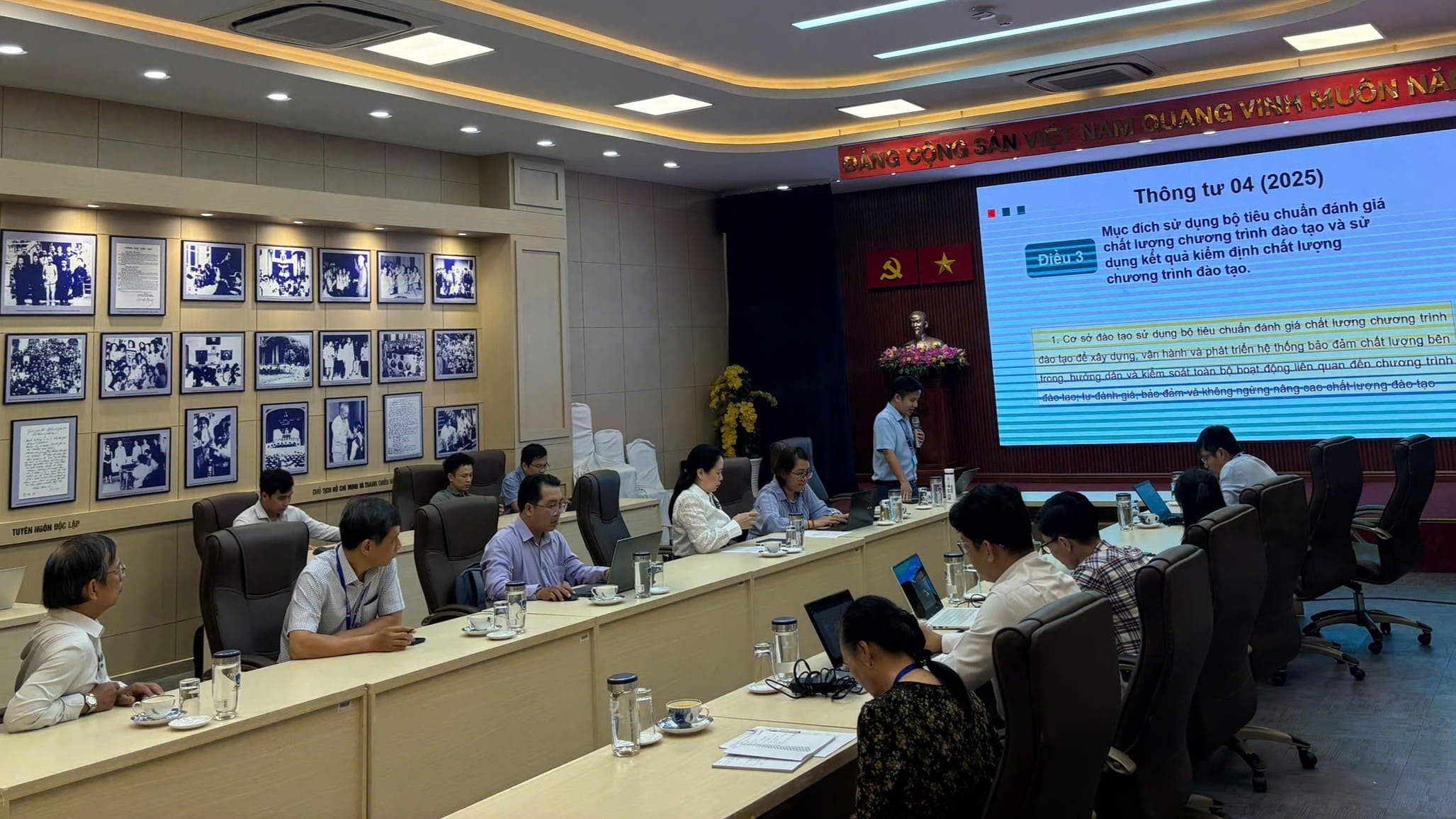
At the meeting, Mr. Nguyen Huu Dang Quang, Deputy Head of the Quality Assurance Department, provided detailed information on the new regulations regarding quality assurance and accreditation based on the Law on Higher Education (Law No. 125/2025/QH15). Accordingly, “periodic self-assessment” is a mandatory activity and a foundation for educational institutions to improve quality, disclose information, and fulfill accountability requirements as stipulated by the Ministry of Education and Training.
The professional guidance provided by the Quality Assurance Department focuses on the following areas:
- Introducing the set of quality assessment standards according to Circular 04/2025/TT-BGDĐT (8 standards, 52 criteria) and comparing the new points with the previous set of standards;
- Guidelines for establishing the Self-Assessment Council, Secretariat, and Task Forces;
- Guidelines for the process of writing a self-assessment report and gathering evidence.
Direction of the self-assessment and quality assurance roadmap for the period 2026-2030
In accordance with the new regulations in the Law on Higher Education (No. 125/2025/QH15), specifically point b, clause 1, Article 36, which states: “Training programs in teacher training, health, and law fields; and training programs in other fields as prescribed by the Minister of Education and Training”. The University has clearly defined its roadmap for the period 2026-2030 to ensure and enhance the quality of its training programs to reach regional and international standards.
- Priority is given to registering for quality accreditation according to the AUN-QA standards: applicable to programs in the teacher trainings, health, and law fields;
- Periodic self-assessment according to Circular 04/2025/TT-BGDĐT applies to new majors with graduating students or those undergoing re-accreditation (not included in the mandatory group).
With decisive leadership from the Board of Directors and professional support from the Quality Assurance Department, the implementation of the self-assessment of the training program affirms the school’s strong commitment to periodic self-assessment based on the level of compliance with the standards set forth in Circular 04/2025/TT-BGDĐT, and from there, to implement improvements to perfect the training program.


The participants in this training session include:
- 11 undergraduate programs including: Pre-school Education*, Biotechnology, Food Technology, Civil Engineering, Hospital Management*, Computer Networks and Data Communication*, Accounting, Automotive Engineering Technology, Architecture, and Restaurant and Food Service Management.
- Master ‘s degree program: Civil Engineering*.
(*) Programs conducting self-assessment for the first time
Department of Quality Assurance
